Bristol and Sevenoaks Clinics to Open in June

We are opening two new clinics in June, with Bristol welcoming its first patients on the 4th and Sevenoaks on the 14th. Both will be offering care for babies who have plagiocephaly as well as knee bracing for patients with osteoarthritis and ACL injuries.

We will also be welcoming two new Orthotists to our team, backed by our 10 years of experience, great product, full clinical support, good results and satisfied clients.

technology in motion

                              Bristol Clinic – Orthotist Martin Bell

Heading up the Bristol clinic is qualified Orthotist Martin Bell BSc MBAPO, with experience in both the NHS and private sectors. He also continues to work for the NHS as an extended scope practitioner within the primary care musculoskeletal assessment team, specialising in lower limb Biomechanics and gait analysis.

The clinic’s convenient location puts it at just a short walking distance from the town centre with plenty of meter parking available for those travelling by car.

Technology in Motion

                                                             Sevenoaks clinic – Orthotist Corrin Glenn

Corrin Glenn, MBA, BSC Hons, MBAPO will head the Sevenoaks clinic. Corrin graduated from Salford University in 2001 with a degree in Prosthetics and Orthotics and has previously worked as a Principal Orthotist. She is also an active member of the British Association of Prosthetists and Orthotists.

For more details on our two new clinicians, visit our Meet the Team page. If you would like to pre-book an appointment at either our Bristol or Sevenoaks Clinic, please call 0330 100 1800, or visit our designated Clinics pages.

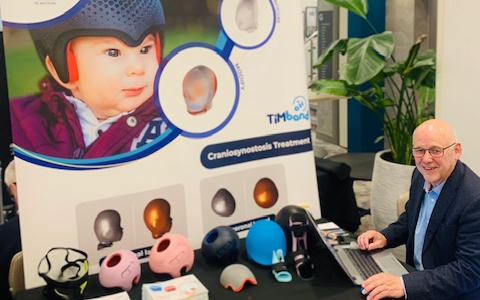
What is Craniosynostosis?

As they are both conditions that affect the growth and shape of a baby’s head, Craniosynostosis is often confused with Plagiocephaly.

When a baby is born, the sutures between the bone plates in the skull are soft and flexible to allow for natural birth. These remain open and flexible until the brain has fully developed and become more rigid sutures to form the firm, protective skull covering.

craniosynostosis sutures
When a baby has Craniosynostosis, there is a premature fusion of one or more of the sutures, which, as the skull is unable to grow properly, causes the head to grow to an unusual shape. This happens because the fused suture(s) prevent normal growth in one area causing compensating growth in another area to as the brain develops.

Also known as, Synostosis, the condition is very rare and reportedly only found in three in 10,000 live births. According to research, plagiocephaly affects approximately three in 100 infants (3.3%). On average, only 1% of babies with a head shape deformity will have a Craniosynostosis.

The different head shapes resulting from a Synostosis depend on which suture is affected. The more common synostotic head shapes include Scaphocephaly, Frontal Plagiocephaly and Trigoncephaly.

craniosynostosis
At Technology in Motion, we see an average of one in 100 infants with a head shape that is not typical of Deformational Plagiocephaly. If we suspect a Synostosis we always refer them back to their GP for investigation by a neurosurgeon or referral to one of the UK craniofacial units. TiMband treatment is not indicated for synostosis and babies with the condition should be under the care of a surgical team.

For more information on the condition and the different types of Craniosynostosis, click here to visit the dedicated page on our website.

Our Wimbledon Clinic is Relocating to Morden

This month our Wimbledon Clinic moves to Morden, giving improved facilities and easy parking.

Since the changes to the local on street parking our clients have found real difficulties in parking and we are responding to these difficulties by this relocation.

We now have a new, bright, dedicated orthotic clinic with easy access.

The clinic will allow us to further develop our services and we look forward to enhancing the care that we offer to our clients.

We continue to offer Technology in Motion’s hallmark brace, Össur’s CTi ligament brace, which has an excellent track record and is recognised as being the best in the field. We will also continue to offer the revolutionary Unloader 1 Osteoarthritis brace to extend the life of the Unicompartment arthritic knee.

The new clinic is located in serviced offices above a well known Sainsbury’s supermarket and as such our TiMband plagiocephaly patients will find travel and parking much easier and safer. There is ample parking in the Sainsbury’s car park (40p / hr), as well as a disabled parking space outside the clinic’s front door.

We are also only 200 yards away from Morden Tube station (Northern Line) and on main bus routes in and around Morden.

At this and all our other clinics, we also now offer Functional Electrical Stimulation (FES) for patients with foot drop and a new line is Bespoke Custom Orthopedic Footwear, made to an individual scan of the patient’s foot to ensure a perfect fit and great functional advantage. Our range has also expanded to include high level Carbon Fibre Stance Phase KAFO’s and AFO’s for people with knee, foot and ankle problems.

Our new address is Technology in Motion, Suite 15, Peel House, 32-44 London Road, SM4 5BT. Our phone number remains the same as 0330 100 1800.

Patients can contact us either at the new location or at our Head Office at Technology in Motion, 2 Mortec Office Park, York Road, Leeds LS15 4TA.

What is Plagiocephaly?

Creating Awareness about Plagiocephaly

One thing many of our clients have in common is the frustration of how little people around them know about plagiocephaly, also known as baby flat head syndrome. As a result, many have used fundraising efforts to raise awareness in their local communities as well as to raise funds for their babies to undergo the helmet treatment.

One mother who took this approach one-step further recently in the States is Abby Blackburn, occupational therapist and mother of son Miller, who was undergoing plagiocephaly helmet treatment at the time.  Out of concern that there was no children’s literature available to help parent’s speak to their children about the helmet, she decided to write a book herself, to answer the questions that her son may ask one day, as well as to help other mothers with babies in a similar situation.

Her book, ‘My Little Blue Helmet’, is a question and answer book that she hopes will enable and encourage parents to open the doors of communication and explain to their children why they had to undergo the treatment when they were infants.

Just like in the UK, the American Academy of Pediatrics introduced its “Back to Sleep” campaign in 1992. Although this did reduce the numbers of Sudden Infant Death Syndrome, the number of babies with plagiocephaly, or a form of the condition, increased dramatically.

TiMband helmetThe response to this was plagiocephaly helmets, which help babies’ heads to grow to a more rounded shape. Unlike here in the UK, helmet treatment for babies with flat head syndrome is not as controversial in the USA and treatment is regularly prescribed, as it is in several European countries.

In the UK, the NHS does not recommend treatment often citing the lack of definitive positive research as a reason. Sadly, this research, although called for, is not commissioned and the debate continues with parents frequently being disappointed at the resulting head shape after following ‘wait and see’ advice.

The helmet works by slowly and gently allowing the head to correct as it grows. With its cleanable closed cell foam lining and semi rigid copolymer shell the helmet is comfortable and babies have very few problems in wearing  them.

At Technology in Motion, we have over 120 babies in treatment at any one time and our experts are widely regarded as clinical leaders in this form of treatment. We have achieved a positive outcome for a vast number of babies using our TiMband corrective treatment, meeting the highest quality of care and safety at all times. Click here to find out more about our TiMband treatment.

Where can you find the Best Orthopedic Shoes?

Where to find the most suitable footwear for difficult feet

Where can you find the Best Orthopedic Shoes?” is a question the TiM Orthotists are often asked.  At the clinic, we see many people who have ‘difficult’ feet, which cause problems in finding adequate, supportive and comfortable footwear on the high street. The conditions that we see include arthritis, previous injury or surgery, or more complex problems resulting from tendon shortening due to muscle imbalance. This means that they find wearing “normal” shoes extremely uncomfortable and even painful at times.

Technology in Motion can now help you by providing footwear that not only fit and support your feet comfortably, but also offers a wide range of styles, colours and materials. We have helped many of our patients save a lot of money by fitting them with the best orthopedic shoes for their needs to help ease their pain and discomfort.

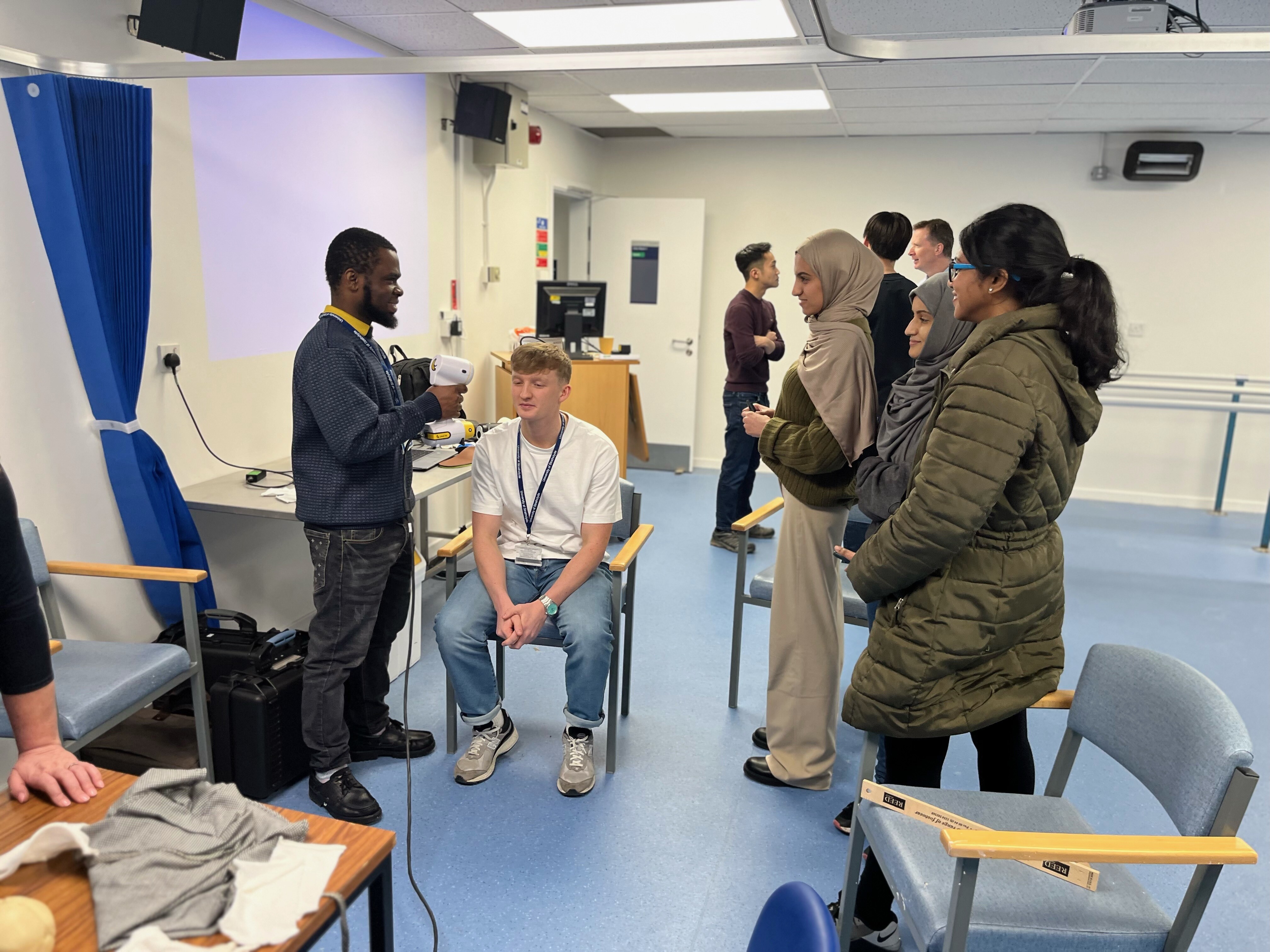
The footwear that we supply is custom-made to an exact dimension of each patient’s foot to ensure a perfect fit. At the initial assessment, we use a scanner to take the exact size and shape of your foot. This is downloaded to our manufacturers to create a last to exactly match your foot for us to make bespoke shoes and insoles.

All of our footwear is designed to give maximum control and we can include supports and stiffeners inside the footwear. Many of our patients no longer have to wear any additional splints or supports due to the high level of support their new, specially made shoes offer them. The shoes we offer are available in hundreds of different designs, colours, heel heights and sole materials. We can also arrange trial fittings if required.

We are currently offering a 10% discount on our custom footwear until the 30th of March 2013. With Technology in Motion already more affordable than other suppliers of this type of footwear, the shoes we supply are also at a much higher quality. Bespoke footwear can cost over £3,000 a pair and by choosing our manufacturing company well, we offer this type of shoe for under £1,000.

Where can you find the Best Orthopedic Shoes?

Where can you find the Best Orthopedic Shoes?

You will find full details of our orthopedic shoes services on our website by clicking here, or contact us for more information.

Flat Head Syndrome Pillow

Should babies sleep on pillows?

Since the implementation of the Sudden Infant Death Syndrome (SIDS) campaign, there appears to have been an increase in the number of flat head syndrome cases. As a result, there are now many questions on the web surrounding what the best flat head syndrome pillow is.

Unfortunately, the solution is not so simple. This is because although there are currently pillows available that have been designed to reduce the tendency for a baby’s head to develop a flattened area, we do not encourage placing anything, such as a flat head syndrome pillow bumpers, or toys in a baby’s crib whilst they sleep.

We appreciate that the conflicting advice and products that are available can overwhelm parents, but our safety advice is always to sleep babies on their backs, on a flat firm surface: pillows contravene this safety advice and we don’t recommend pillows for babies under the age of one.

The main reason for this is that, should your baby get their face pressed against any of the objects, they will not be able to lift themselves up. Furthermore, once a baby reaches five months they begin to roll independently, making pillows even less useful.

There is however, still the concern that placing your baby to sleep on a flat surface can have a negative impact on their soft skull. So, what is the solution?

repositioningAt Technology in Motion, we always recommend giving your baby time on their tummy when they are awake and you are with them rather than resorting to the use of other methods. The introduction of repositioning techniques will allow your baby to spend time on their tummy, under your supervision, giving them time throughout the day without any pressure placed against their head. If you do have a donut shaped pillow, we recommend that you only use it to support the back of your baby’s head when your baby is awake and you are with them.

The preferred age for repositioning is as soon as you start to notice a flattening and even from birth. Repositioning becomes less effective between the ages of four and five months when your baby should be starting to roll independently, however, if a flattening has already started to develop you should begin repositioning immediately. Feeding your baby from different sides and changing their sleeping position in their cot can also help, particularly if they always tend to turn to one side.

Giving your baby supervised time on their tummy is also an ideal way to teach them to use their arms to prop themselves up and good exercise for strengthening their backs, hips and neck muscles. You can read more about the various techniques you can use on our Repositioning Guide and why they are more effective than using a flat head syndrome pillow.

Leeds Open Day Tomorrow – Event Update

Custom Footwear

Custom Footwear

Despite the cold weather, we are going ahead with our open day at our Leeds clinic on Thursday, 17th January, from 9:00am to 5:00pm.

The day will showcase the following three new offers from Technology in Motion:

Custom-Made Footwear, made to a scan of your foot. We’ve teamed up with one of the most innovative and forward-looking companies in the world to offer the very best in custom footwear manufacture at a very reasonable price.

Functional Electrical Stimulation

Functional Electrical Stimulation

Functional Electrical Stimulation(FES), to help  people with a foot drop, which is due to a central nervous system problem such as multiple sclerosis, stroke or cerebral palsy. We are also able to offer the traditional splinting options for those not suitable for FES.

Caliper joint and materials technology has moved on very significantly in the last few years. We are able to offer these advancements to our clients in the form of Stance Phase Calipers.

These new services are available in Leeds now and will be rolled out to our other clinics in due course.

Stance Phase Control Calipers

Stance Phase Control Calipers

Steve Mottram, Managing Director, commented, “We’re really excited about these developments and know that many of our clients will benefit from their introduction.”

For more information visit our website or call 033 0100 1800.

Technology In Motion Open Pre-Assessment Day to be Held on 17 January 2013

Technology in Motion will be holding an open pre-assessment day at our Leeds clinic on the 17 of January 2013 and are inviting both physiotherapists and patients to come and see if we can offer some additional help. Full event details below.

Pre-Assessment Day


Debate Sparked About Plagiocephaly Treatment According to the NHS

The Daily Mail has covered one of our patient stories, which you may recognise from our recent blog posts. If you missed it, here is a quick recap:

Told by their health visitor at the time that the flattening on their son Coby’s head would correct itself, the Donnison’s sought further advice and treatment from Technology in Motion. As the NHS does not currently fund this type of plagiocephaly helmet treatment, it was thanks to the help of local businesses in Bridlington and their fundraising efforts that the family managed to raise enough money for Coby to have the TiMband helmet, which he began wearing at 5 months old. By 11 months, his helmet was off and the family were both ecstatic and relieved with the immense improvement in Coby’s head shape. Click here to read the full story.

The Daily Mail then sparked a number of debates after mentioning the “downsides” of the treatment according to the NHS and the reasons why they do not fund it. Below is our response to their comments:

E-MAG Active – Innovative Leg Bracing Equipment

The E-MAG Active is a trend-setting innovation in the development of orthotic knee joint systems, which sets new standards in terms of safety, dynamics and mobility.

E-MAG ActiveControlled Stance Phase – Free Swing Phase

Thanks to unique functions, the E-MAG Active offers the user noticeable advantages:

E-MAG Active is the first electronically managed system knee joint with controlled stance and free swing phase that works independently from the ankle joint and foot sole.

The principle of the E-MAG Active is both innovative and consistent. An intelligent sensor system measures the position of the leg during walking and causes the orthotic joint to switch accordingly. As the joint works independently from the ankle joint and foot sole, the patient can use the function of the orthotic joint even if his ankle is without function.

The brace also offers patients a significant gain in mobility and safety, enabling them to walk much more naturally and smoothly, improving their overall quality of life.

It is suitable for patients with an increased need for mobility that have up to now not been able or have declined to be adequately fitted with an orthosis for different anatomical reasons. The E-MAG Active can help prevent contractures and joint damage caused by immobilization and reduced muscular atrophy, whilst promoting the development of existing muscles. As a result, the contra lateral side is relieved and compensating movements avoided.

Advantages at a glance

•    E-MAG Active is a joint system for custom-made orthoses
•    It works independently from the ankle joint
•    There are no electronic components in the lower leg section of the KAFO
•    The E-MAG Active has a self-adjusting software
•    Other software adjustments are not required
•    Different flexion angles from 5° to 10° in increments of 2.5° are possible and can be ordered separately

Indications

The E-MAG Active was developed for patients who, due to a partial paralysis or a complete failure of knee extensors, are unable to stabilise their knee without compensatory measures. For safe use of the knee joint system, a certain amount of residual muscle function or knee joint hyperextension is required to ensure safe switching of the swing and stance phases.

Although the knee joint system works with unilateral control, it must always be equipped with a medial support. The E-MAG Active is approved for patients with a body weight of up to 85kg/187lbs and ankle joint function is not required. Use of the brace is also possible in cases of leg length reductions or in combination with orthoprosthesis.

Contraindications – Why treatment can sometimes be withheld

•    Insufficient residual muscle function that would ensure safe use of the E-MAG Active
•    Non-existent knee joint hyperextension
•    No possibility of influencing knee joint extension with a dorsal stop
•    Knee joint flexion contracture of more than 15°
•    Cognitive problems
•    Severe spasms putting safe function at risk

Gait cycle with E-MAG Active

Gait cycle with stance control knee joint systems

In contrast to the gait cycle of a healthy person, the knee joint of patients with lacking function of the knee stabilising muscles must be stabilised by an orthosis. The stance control knee joint systems from Otto Bock provide stability when needed and do not compromise the swing phase as the orthotic joint is released between the terminal stance and pre-swing phases.

Between heel contact and toe-off, i.e. when the foot bears weight on the ground, the joints secure the knee joint and support the knee stabilizing muscles. During the entire stance phase, the orthoses remain locked.

Studies have shown that, in comparison with a locked orthosis, stance control orthoses offer considerable advantages with regard to energy expenditure, walking speed and reduction of the strain on the contra lateral side.